
Reviewed by Fisher Engineering’s environmental QPs: David Fisher, P.Eng., C.Chem. (QP) · Bernard Chan, P.Eng., C.Chem. (QP) · Marius Voinea, P.Geo., B.Sc. (QP). Meet the team

Identifying potential environmental concerns through historical records reviews

Sampling and testing soil, groundwater
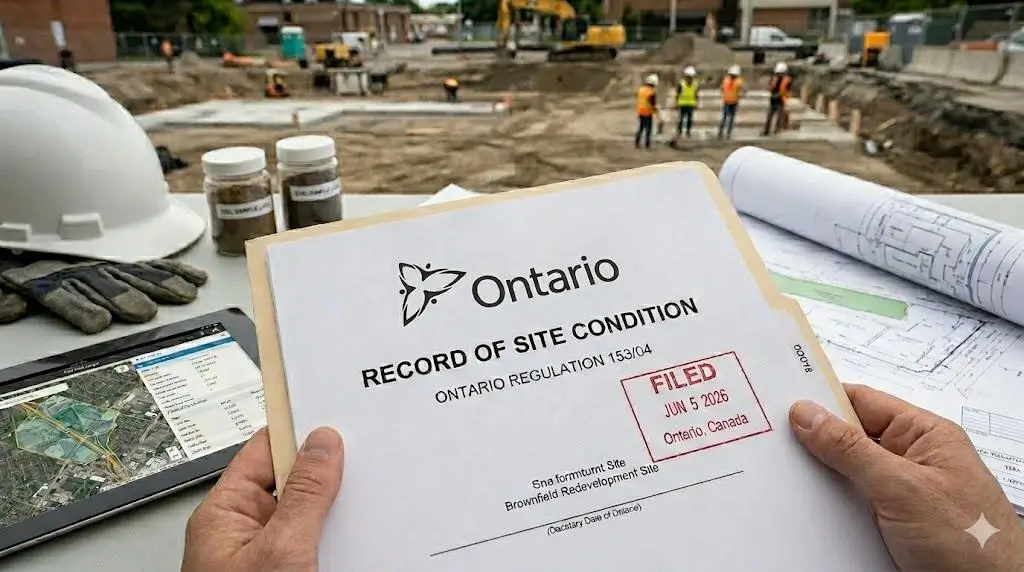


An environmental site assessment answers one question: is there contamination on this property, and if there is, what has to happen before the purchase, the loan or the development can go ahead. Most files follow the same path, and most of them stop at the first step.
Lenders are the most common reason. Banks financing commercial or industrial property usually want a Phase One before they commit, and they will specify the standard. Buyers order one during the conditional period so a contamination problem shows up before closing, not after. Municipalities can require one with a planning or permit application, and developers need the full path to an RSC when they convert a site to residential use.
Sellers sometimes get ahead of it too. A recent, clean Phase One can take a condition off the table and shorten a negotiation.
In Ontario a Phase One is done either to CSA Z768-01, the due diligence standard lenders and buyers use, or to O. Reg. 153/04, the standard required for a Record of Site Condition. A CSA report cannot be upgraded later. If there is any chance the property will change use, doing the Phase One to the RSC standard from the start costs less than paying for two. Our RSC page has a side-by-side comparison.
RSC-standard work has to be completed or supervised by a Qualified Person, which under O. Reg. 153/04 means a licensed Professional Engineer or Professional Geoscientist with the required experience.
Tell us the property address, what it is used for now, and why you need the assessment. Call 905-475-7755 or send us a message and we will tell you which assessment you actually need.
The usual triggers are a lender financing a commercial property, a purchase, a municipal planning application, or a change to a more sensitive use like industrial to residential. That last one requires a Record of Site Condition under O. Reg. 153/04.